
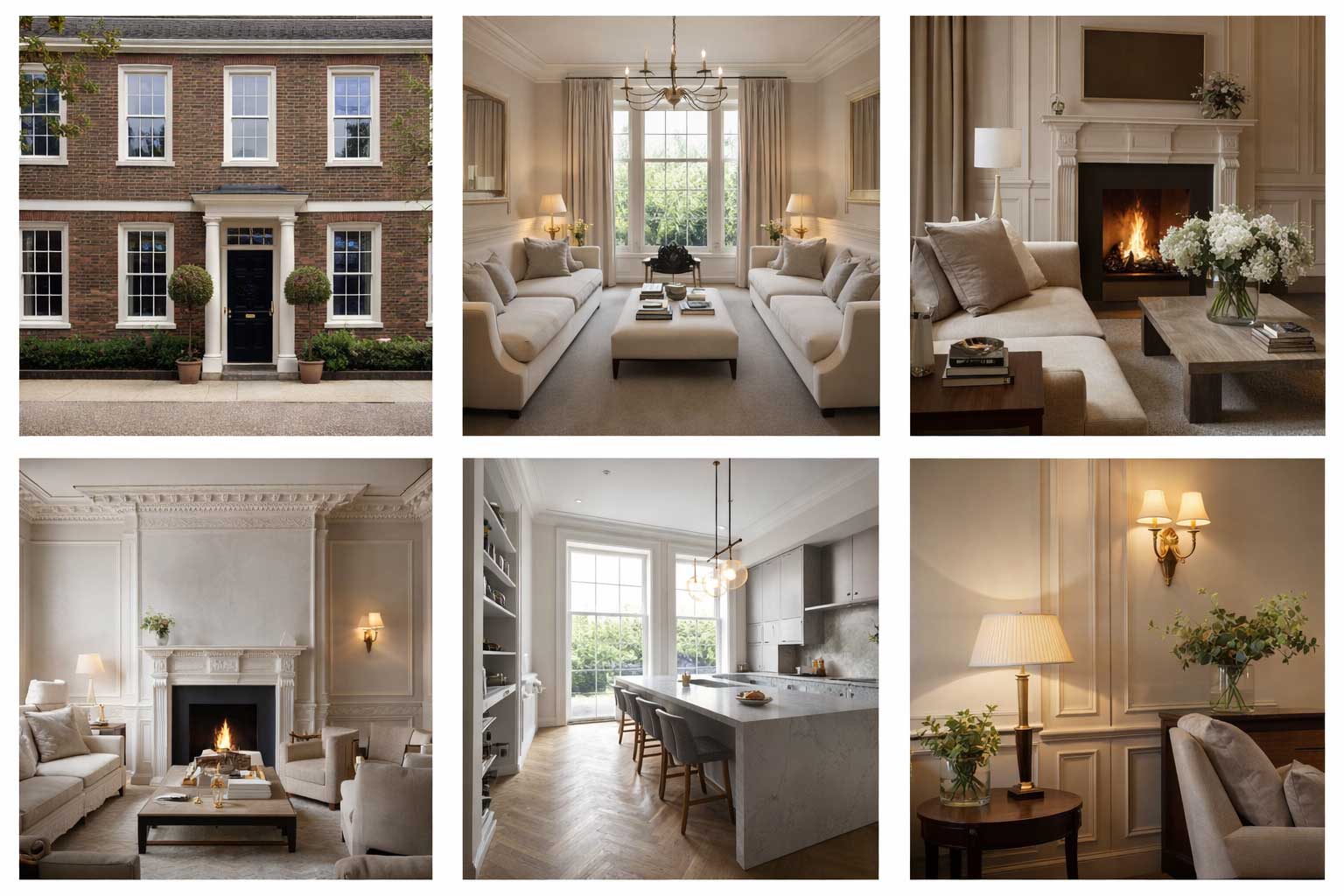
Georgian houses remain some of the most elegant and architecturally refined homes in the UK. Defined by their symmetry, generous proportions and understated detailing, they offer an exceptional foundation for considered interior design.
However, decorating a Georgian property requires a careful balance. While these homes lend themselves to classic design principles, modern living demands comfort, functionality and subtle contemporary intervention.
In this guide, we explore how to approach Georgian house interiors with a refined, architectural sensibility — creating spaces that feel timeless, cohesive and entirely personal.
Understanding Georgian Architecture
Before approaching the interior, it is essential to understand the architectural language of a Georgian home. These properties are defined by symmetry, proportion and restraint.
Rooms are often arranged with a clear hierarchy — from formal reception spaces to more private areas — and feature high ceilings, tall sash windows and balanced layouts.
Respecting this structure is key. Rather than imposing design, the most successful interiors respond to the architecture, enhancing rather than competing with it.
Proportion & Layout
One of the defining characteristics of Georgian interiors is their sense of proportion. Furniture placement should reflect the scale of the room, allowing space to breathe.
Avoid overcrowding. Instead, focus on:
- well-balanced seating arrangements
- clear visual axes
- symmetry where appropriate
In larger rooms, creating multiple seating areas can help maintain intimacy while respecting scale.
Colour Palettes for Georgian Interiors
Colour in Georgian homes should feel considered and cohesive. While traditional palettes often include muted neutrals, soft greys and heritage tones, contemporary schemes can introduce depth through layering rather than contrast.
Consider:
- warm neutrals (stone, chalk, linen)
- muted greens and blues
- deep tonal palettes for more dramatic rooms
The aim is to create a sense of calm continuity throughout the property.
Materials & Finishes
Material selection plays a crucial role in achieving a refined Georgian interior. Natural materials work particularly well, adding texture and authenticity.
Common choices include:
- timber flooring or parquet
- natural stone
- lime-based paints
- bespoke joinery
Layering materials creates depth without overwhelming the architectural simplicity.
Modern Living Within a Period Property
While Georgian homes are rooted in tradition, they must also function for contemporary life.
The key is integration, not contrast.
Modern elements — such as lighting, kitchens or glazing — should feel considered and harmonious, rather than starkly contemporary.
Open-plan layouts can work beautifully when handled sensitively, maintaining visual flow while respecting original proportions.
Lighting & Atmosphere
Lighting is often overlooked but is essential in Georgian interiors.
Layered lighting creates warmth and flexibility:
- ambient lighting for overall mood
- task lighting for functionality
- accent lighting to highlight architectural features
Wall lights, table lamps and discreet ceiling fixtures tend to work better than overly decorative fittings.
A Considered Approach to Luxury
Luxury in a Georgian home is not about excess, but restraint.
It lies in:
- quality materials
- thoughtful detailing
- cohesive design
A well-designed Georgian interior feels effortless — where every element has been carefully considered, yet nothing feels forced.
Decorating a Georgian house is an exercise in balance — between past and present, elegance and comfort, architecture and lifestyle.
When approached with sensitivity and expertise, these homes offer the opportunity to create interiors that are not only beautiful, but enduring.
If you are renovating or designing a Georgian property in Berkshire or the Home Counties, our studio offers a highly personalised interior design service tailored to each home and client.