Interior design / Investment and planning
Understanding the investment behind a considered home.
How much does luxury interior design cost in the UK? It is one of the first questions homeowners ask when considering a substantial renovation, a bespoke new residence or a complete furnishing commission.
The answer is rarely represented by a single figure. A project may involve professional interior design fees, bespoke cabinetry, furniture, lighting, specialist materials, construction work and the practical arrangements required to bring everything together.
These are different areas of expenditure, and understanding the distinction is essential when developing a realistic budget. The cost of appointing an interior designer is not the same as the amount needed to furnish or renovate a property.
For private clients undertaking significant residential projects, the most useful starting point is to consider the overall investment alongside the scope of professional involvement required.
01 / Understanding your budget
Design Fees, Furniture and Procurement: Three Different Costs
When planning a luxury interior, distinguish the fee for designing your home from the cost of the items purchased for it and the service of managing those purchases.
These costs may appear within one proposal, but each should be identifiable. A furniture allowance does not automatically include design services, and a design fee does not automatically include the furniture or the procurement service.
Your appointment should explain which services are included, which purchases require a separate allowance and how any additional charges are calculated.
Building works, other consultants, delivery, storage and installation also need to be identified in the overall budget. Their inclusion should be stated explicitly.
02 / Where the investment goes
What Does Each Part of the Budget Cover?
A useful interior budget separates professional services from goods and practical delivery costs. This allows you to understand what has been allowed for before approving the scheme.
A / Professional design services
Interior Design Fees
The fee for developing the agreed design. Depending on the appointment, this may cover spatial planning, concepts, furniture layouts, material selections, interior drawings, bespoke joinery design and specifications. It pays for the studio’s professional work. It does not, by itself, pay for the furniture, materials or manufacture of the items designed.
B / The items for your home
Furniture and Furnishings
The purchasing allowance for the approved pieces: sofas, chairs, tables, beds, rugs, decorative lighting, curtains, upholstery and accessories. The schedule should identify which rooms and items are included, together with quantities and quoted prices. Fitted joinery, kitchens, bathrooms and architectural finishes should have clearly identified allowances where they form part of the project.
C / Managing the purchases
Procurement Services
The service of administering approved purchases. The agreed scope may include placing orders, communicating with suppliers, tracking lead times and coordinating deliveries. Procurement is distinct from the cost of the goods. The proposal should explain whether this service is included in another fee, charged separately or reflected in the agreed pricing of supplied items. It should not be added again if already included.
D / Bringing the scheme together
Delivery and Installation
Transport, storage, furniture assembly, curtain fitting, specialist handling and installation may require separate allowances. Coordinating a delivery is a professional service; the carrier’s delivery charge is a separate cost unless expressly included. The same distinction applies to organising installation and paying the installers.
E / The wider property project
Building Works and Other Consultants
Construction, alterations, electrical and plumbing work, decoration and other trade packages need their own defined budgets. Architects, engineers and other appointed consultants may also charge separately. These costs should not be assumed to sit within either the interior design fee or a furniture purchasing allowance.
Every proposal and purchasing schedule should state whether VAT is included. Your total budget should account for each applicable category once, with inclusions, exclusions and provisional allowances clearly identified.
03 / Reading the proposal
How Much Should You Allow for Design and Furniture?
The professional design fee should be established from the agreed scope of work. Designing the interiors of a substantial new residence involves different responsibilities from selecting furnishings for rooms whose layouts and finishes are already complete.
Your proposal should identify the rooms involved, the design stages, the drawings and specifications to be produced, the extent of coordination and the arrangements for revisions or additional work. It should also state how the fee is calculated and when payments are due.
Furniture and furnishings require a separate purchasing schedule. This should be developed around the actual pieces needed, the dimensions of the rooms, the quality of specification and any existing items being retained.
For example, a sitting-room purchasing allowance might cover seating, occasional tables, a rug, decorative lamps and curtains. That allowance should not be presented as the cost of the designer’s professional services. Nor should it be described as a complete room budget unless the other applicable charges are included.
Procurement arrangements should then be explained alongside the design fee and purchasing schedule. If a separate procurement charge applies, the proposal should state its basis and what work it covers. If procurement is already included, that should be equally clear.
At Kings Interiors, the services, fees and responsibilities for your commission are set out in a project-specific proposal. This provides the basis for understanding the professional appointment alongside the investment required for the approved interior scheme.
04 / Scope and specification
Why Can Two Similar Homes Have Very Different Budgets?
Property size matters, but square footage alone rarely explains the cost of an interior scheme.
The number of rooms, complexity of the layouts and amount of detailed design work all influence professional fees. A project involving technical interior drawings, individually designed cabinetry and coordination with several specialists requires a different level of involvement from a furnishing-only commission.
Specification has an equally important influence on the purchasing budget. Bespoke sofas, specialist lighting, made-to-measure curtains and handcrafted cabinetry can represent substantial investments.
Natural stone, specialist wall finishes and carefully detailed bathrooms may also require skilled fabrication and installation.
Existing furniture and architectural features can sometimes be incorporated into a new scheme, while a property requiring complete furnishing naturally calls for a more extensive purchasing allowance.
The right budget is therefore established by the scope and intended quality of the finished interior, not simply the number of bedrooms or the postcode.
05 / Investing in the details
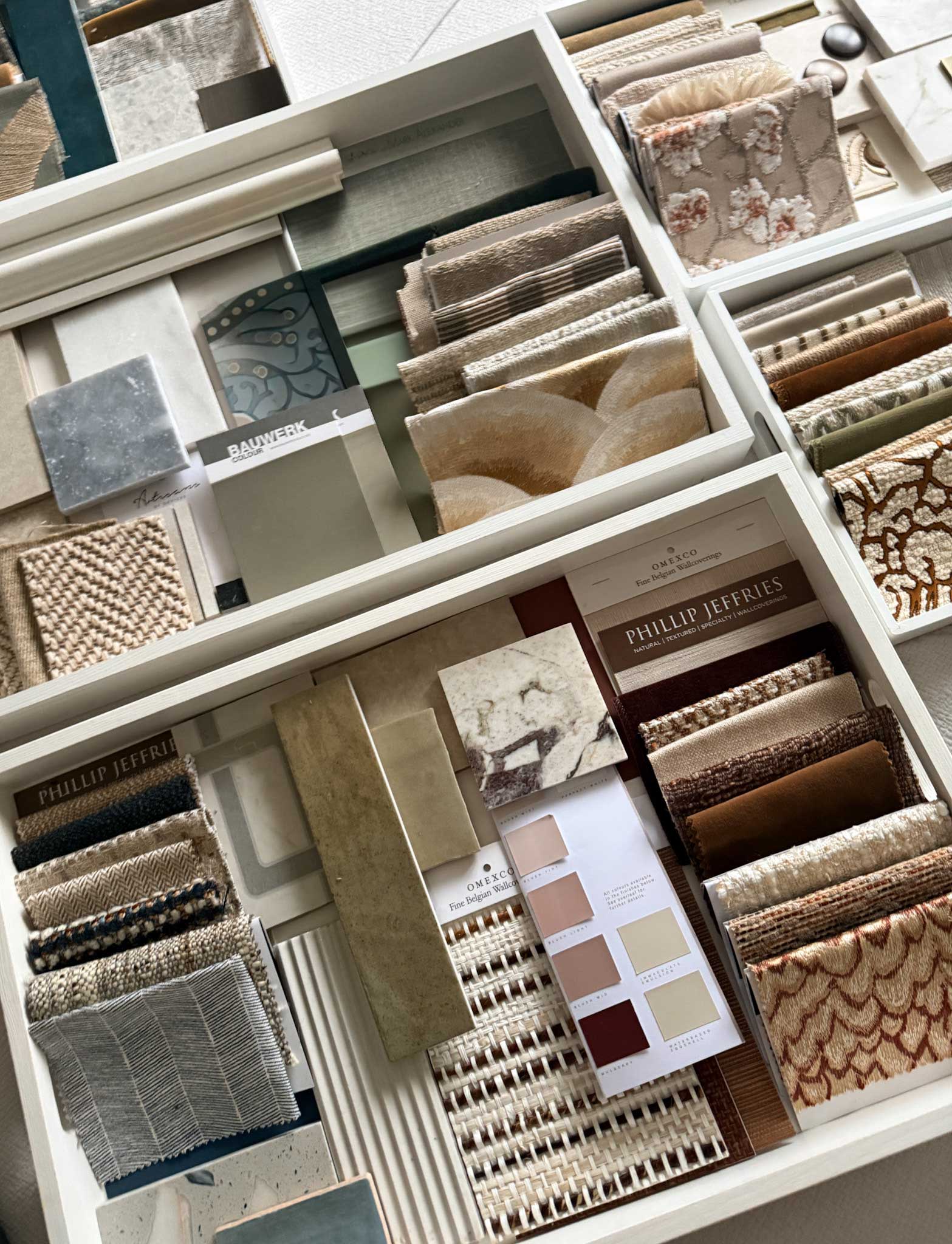
Bespoke Materials, Joinery and Furnishing Quality
Luxury interior design is often defined by the quality of elements that are not immediately obvious in a photograph.
The proportions of bespoke joinery, the finish of a cabinet interior, the way curtains fall and the comfort of individually specified upholstery all contribute to the experience of a room.
These details can involve additional design development, sampling, specialist manufacture and careful installation. Consequently, two interiors with similar layouts may have considerably different costs.
A carefully considered scheme does not need to use the most expensive product in every category. The value comes from choosing where bespoke craftsmanship has the greatest impact and establishing a balanced material palette throughout the residence.
Our guide to bespoke joinery in luxury interior design explores this aspect of residential design in greater detail.
06 / Different types of commission
New Build, Renovation or Complete Furnishing?
The type of residential project has a substantial influence on how the overall budget should be structured.
For a bespoke private new build, the interior designer may become involved during architectural planning. Room proportions, kitchens, bathrooms, lighting, cabinetry and furniture layouts can then be developed alongside the wider plans.
A major renovation brings additional considerations. Existing structures, retained features, building services and unforeseen conditions can influence the construction programme and the work required to achieve the design intention.
By contrast, a complete furnishing commission may not require structural changes at all. Expenditure is concentrated on furniture, decorative lighting, textiles, artwork, accessories, procurement and final installation.
These commissions should not be compared on headline figures without first understanding what has been included within each scope.
For larger projects, involving the interior designer early can also help establish realistic allowances before important specifications are committed.
Read our separate guides to when to appoint an interior designer for a renovation and when to appoint a designer for a new build .
07 / From specification to purchase
What Does Procurement Cover, and How Is It Charged?
Selecting a sofa, paying for the sofa and managing its order are three different parts of the process.
Selecting its proportions, upholstery and relationship to the room forms part of the agreed design work. The sofa itself is a purchase within the furniture budget. Administering the approved order forms part of procurement where that service is appointed.
Procurement may include confirming specifications with suppliers, placing orders, tracking production, communicating lead times and coordinating delivery arrangements. The appointment should define which tasks the studio undertakes.
The commercial arrangement should be clear before purchases are approved. Ask whether procurement is included in the professional fee, charged as a separate service or reflected in the agreed selling prices of supplied goods. Where a percentage charge applies, the proposal should identify the amount it is calculated against and the treatment of VAT.
Any arrangements concerning supplier discounts, margins or handling charges should also be explained. A trade discount should not be assumed to pass to the client unless that treatment has been agreed.
Confirm who supplies the goods, who receives payment and who handles damaged items, replacements or supplier queries. These responsibilities should be understood before orders are placed.
Delivery, storage and installation should remain identifiable. A procurement service may organise these activities while the transport company, storage provider or installer charges separately.
The result should be a clear purchasing arrangement: approved goods at agreed prices, an understood procurement service and visible allowances for bringing everything into the home.
08 / From the Kings Interiors portfolio
Two Projects, Two Very Different Scopes
Our completed projects illustrate why the scope of a commission matters more than a generic price per room. The following examples are provided to explain different types of service, not to imply that their private project budgets are being disclosed.

A Complete Furnishing Commission
At Enborne, Kings Interiors delivered a comprehensive furnishing and styling scheme for a countryside residence prepared for high-end rental use.
The commission involved furniture, lighting, textiles, artwork, practical household items, procurement and final installation. It did not involve structural renovation.
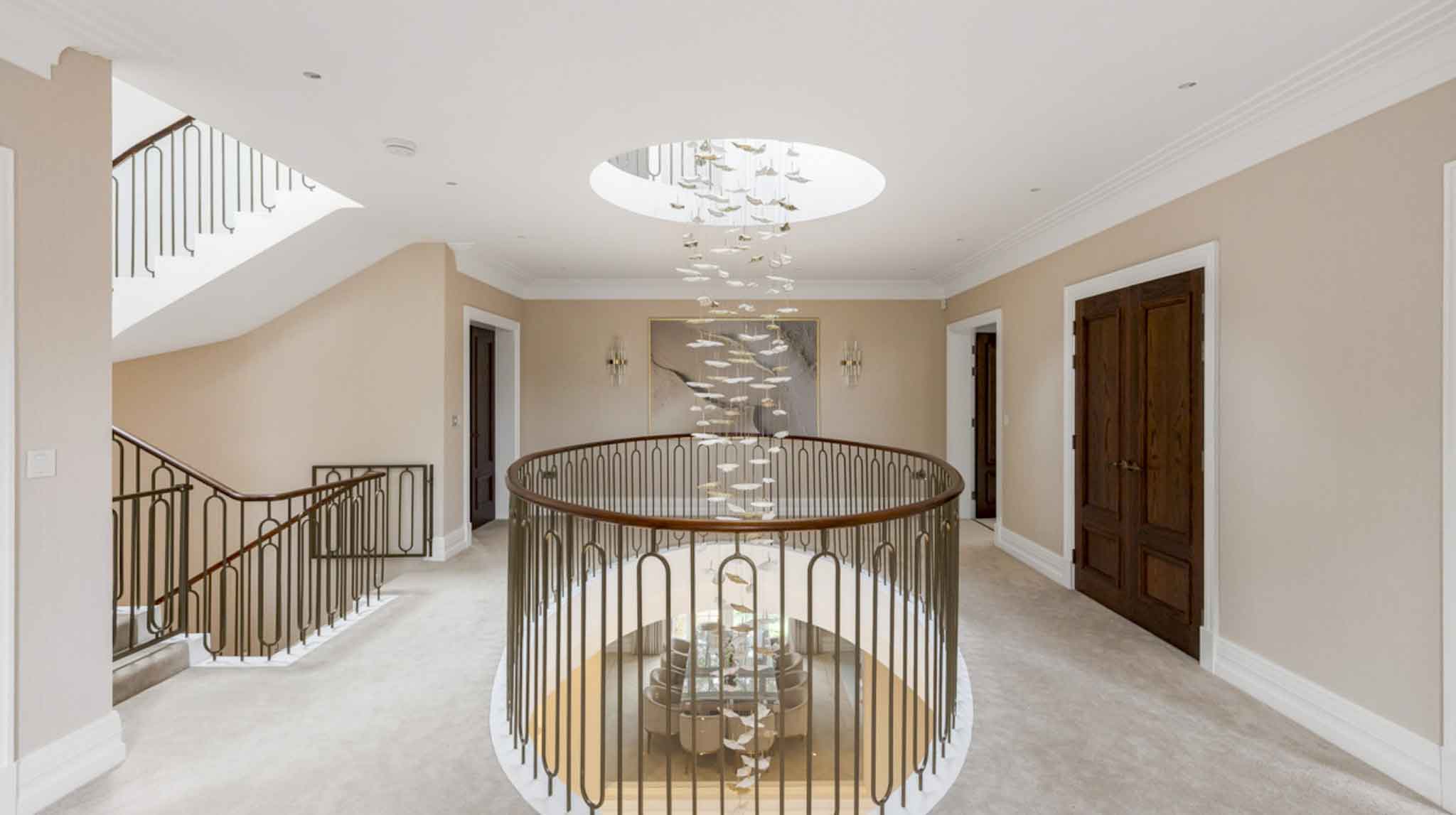
Interior Design at Residential Scale
Kingswood Grand House is a completed 10,000 sq ft private new-build residence for which Kings Interiors delivered a complete interior design and installation commission.
The scale of the property, its principal spaces and detailed interior requirements illustrate the complexity involved in coordinating a substantial residential scheme.
09 / Before commissioning a designer
How to Establish a Realistic Interior Design Budget
It is not necessary to know the exact cost of every sofa, cabinet or lighting fitting before approaching an interior design studio.
However, an indication of the overall investment available is extremely useful. It allows the design team to develop an appropriate scope and recommend a suitable level of specification.
Begin by considering whether the work involves a complete property, several principal rooms or a defined furnishing commission. Consider the quality of items required, whether significant existing furnishings will remain and the level of bespoke detailing desired.
Where construction forms part of the project, the building budget should be considered separately from furnishings and professional design fees.
Appropriate contingency is also important, particularly for renovations where hidden conditions or changes during construction may affect expenditure.
A budget should provide direction without making the design unnecessarily rigid. The objective is to make informed decisions about priorities and allocation before significant commitments are made.
10 / Understanding the proposal
What Should Be Clear Before Appointing an Interior Designer?
A well-prepared proposal should explain what the interior designer will undertake and how the professional fee relates to that work.
For a substantial renovation or bespoke new build, it is useful to understand which drawings and specifications will be produced, how the designer will coordinate with the wider project team and whether site attendance forms part of the appointment.
Procurement responsibilities should be equally clear. Some commissions include a complete sourcing and installation service; others involve design and specification only.
The proposal should also explain how additional work, variations to the brief and changes to the programme will be handled.
Transparency at this stage allows clients to assess proposals on the basis of actual services rather than comparing fee figures that may cover very different responsibilities.
It also establishes a clearer foundation for the working relationship throughout the design and installation process.
11 / Beyond the figures
Is Professional Interior Design Worth the Investment?
The value of an interior designer is not confined to the selection of furniture or the appearance of the finished rooms.
On a substantial project, professional interior planning can help align furniture layouts, lighting, cabinetry and material specifications before important construction decisions are finalised.
The designer also brings a coherent approach to the entire property, considering how individual rooms relate to one another and how the home will function in everyday life.
Careful planning may help identify potential conflicts earlier, although no professional service can guarantee that a complex renovation will be free of variations or unexpected costs.
For many private clients, the principal benefit lies in having an experienced professional develop and coordinate a personal design direction across the full commission.
The result should be more than a collection of beautiful purchases. It should be a home where architecture, materials and furnishings belong together.
12 / Practical questions
Before You Begin Your Interior Design Commission
Does the design fee include furniture?
No. Our design fee covers the professional services specified in your appointment. Furniture and furnishings are always purchased separately and require their own budget. Any procurement charges are explained in your proposal.
Is procurement included in the design fee?
Procurement may be included within an agreed fee, charged separately or reflected in the agreed prices of supplied goods. Your proposal should explain the arrangement and the tasks covered before purchases are approved.
Are delivery, installation and VAT included?
Each proposal and quotation should state its inclusions and VAT treatment clearly. Delivery, storage, specialist handling and installation may require separate allowances, even where the studio coordinates those activities.
Does full-service interior design include managing building works?
This depends on the appointment: interior design coordination and procurement do not automatically include construction management or contract administration. The respective responsibilities of the studio, contractor and wider professional team should be established at the outset.
Do I need an exact budget before contacting the studio?
An initial investment range is enough to begin a useful conversation. Explain whether it needs to cover furnishings alone or also professional fees, procurement, installation and building works, so that the scope can be considered appropriately.
Can the project be completed in phases?
Phasing can be discussed when developing the brief, with an overall design direction guiding individual rooms or stages. Separate deliveries, potential storage and changes in supplier pricing or availability should be considered within the programme and budget.
Kings Interiors / Private residences
An Individual Approach to Every Residential Commission
Understanding luxury interior design costs begins with defining the scale of the property, the scope of professional services and the quality of the intended interior.
A single room furnishing scheme, a comprehensive country house commission and the complete interior design of a bespoke new residence require very different approaches.
At Kings Interiors, we work with private clients planning substantial new builds, major residential renovations and complete furnishing commissions. Our services are developed around the individual property, project requirements and agreed scope of involvement.
Based in Berkshire, our studio works across the Home Counties, London, the Cotswolds and the wider South of England.
If you are considering a significant residential project, an initial conversation about the property, proposed programme and intended investment is a useful place to begin.
Explore our full-service interior design approach to learn more about how we develop considered residential interiors from the earliest plans through to complete furnishing and installation.