
In luxury residential interiors, bespoke joinery plays a defining role in shaping both the character and functionality of a home. Unlike standard cabinetry or off-the-shelf furniture, bespoke joinery is designed specifically for the architecture of the property and the lifestyle of its occupants.
From architectural wall panelling and custom shelving to integrated wardrobes and kitchen cabinetry, bespoke joinery allows interior designers to create spaces that feel considered, cohesive and highly personal. These crafted elements often become the structural backbone of an interior scheme, providing both visual balance and practical storage.
In high-end renovation projects, bespoke joinery is rarely an isolated feature. It is usually developed as part of a broader design strategy, working alongside spatial planning, lighting design and architectural detailing. Understanding how interior designers add value to full home renovation projects can help homeowners appreciate how carefully designed joinery contributes to a more refined and cohesive interior.
The Architectural Role of Bespoke Joinery
Bespoke joinery is often used to reinforce the architectural rhythm of a room. Rather than appearing as independent furniture pieces, custom cabinetry can become integrated into the fabric of the building itself.
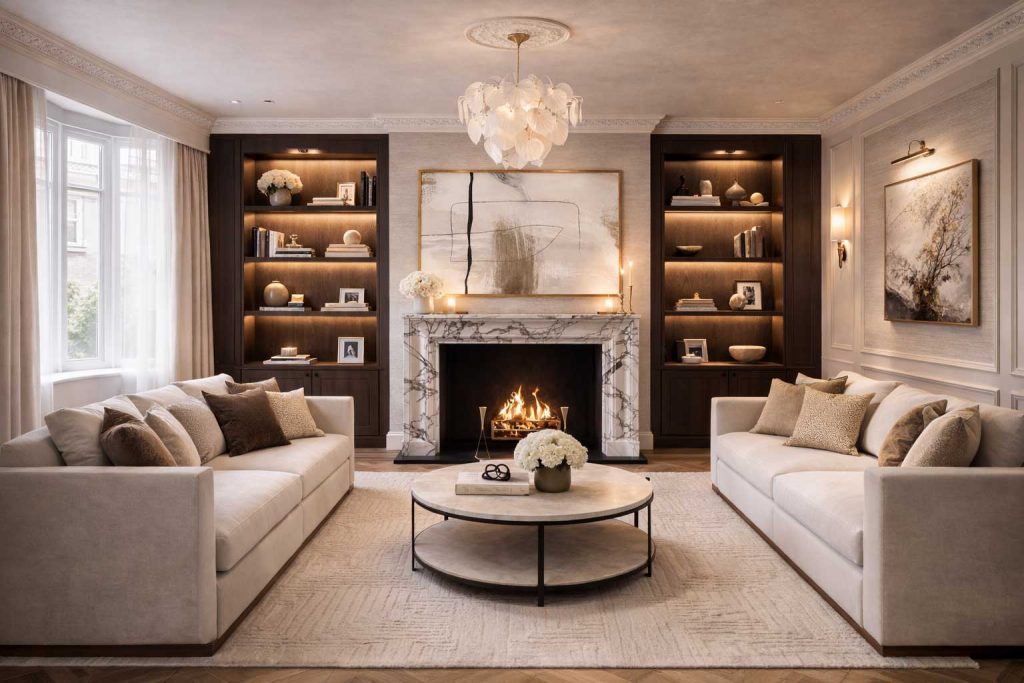
Panelled walls, fitted shelving and custom media units can introduce symmetry and proportion within a space. In period homes, this approach allows new design interventions to sit comfortably alongside historic architectural details.
For homeowners undertaking major renovation projects, bespoke joinery is often developed alongside broader architectural changes. Our article on planning a luxury home renovation explores how early design decisions shape the spatial structure of a property and allow joinery to be integrated seamlessly within the overall scheme.
Creating Functional Storage Solutions
Beyond its aesthetic role, bespoke joinery provides highly tailored storage solutions that reflect how a home is actually used.
Living rooms may incorporate integrated shelving for books and display pieces, while bedrooms can feature fully fitted wardrobes designed around the specific needs of the homeowner. Kitchens and utility spaces often rely on custom cabinetry to accommodate appliances, maximise storage and maintain a clean architectural appearance.
These solutions are particularly valuable in older properties where room layouts were designed for a different era. Our guide to structural changes that transform older homes explores how spatial adjustments can create opportunities for carefully integrated storage and joinery.
Joinery in Period Property Renovations
When renovating historic properties, bespoke joinery plays an important role in maintaining architectural authenticity. Rather than introducing elements that feel disconnected from the building’s character, custom cabinetry can be designed to echo traditional mouldings, proportions and materials.
This approach allows contemporary functionality to coexist with historic architecture. Our article on renovating a period property explores how careful design decisions can preserve heritage features while introducing modern comfort and practicality.
Kitchens and Bespoke Cabinetry
Kitchens are one of the spaces where bespoke joinery is most visible. Custom cabinetry allows designers to create layouts that respond precisely to the architecture of the home while incorporating high-quality materials and integrated appliances.
In period homes, kitchens are often extended or reconfigured as part of a larger renovation. Our guide to kitchen extensions for period homes explores how carefully designed additions can create generous kitchen spaces while respecting the architectural character of the property.
Craftsmanship and Material Selection
The success of bespoke joinery relies heavily on craftsmanship and material selection. Natural timber, specialist finishes and precision detailing contribute to joinery that feels substantial and enduring rather than purely decorative.
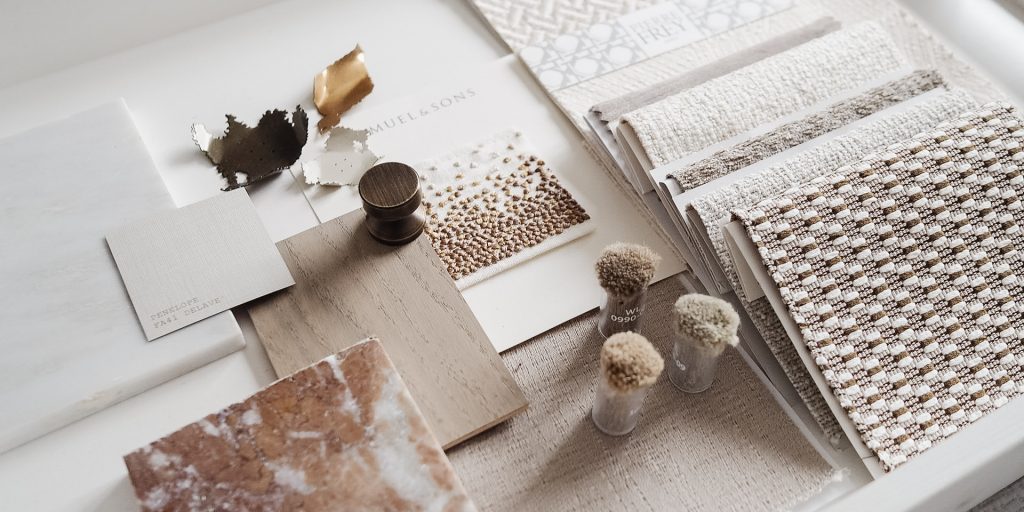
Carefully chosen materials also allow joinery to sit harmoniously within the wider interior palette. Wood tones, painted finishes and metal detailing can all be coordinated with flooring, stone surfaces and architectural features to create a cohesive interior language.
A Cohesive Interior Design Approach
In luxury interiors, bespoke joinery is rarely conceived in isolation. It forms part of a broader design narrative that includes spatial planning, lighting design and architectural detailing.
When these elements are developed together, the result is an interior that feels deliberate and balanced. Rooms appear composed rather than furnished, and practical elements such as storage become integrated into the architecture of the home.
At Kings Interiors Ltd, bespoke joinery is a key component of our design-led approach to residential renovation. Homeowners considering a design-focused renovation may wish to explore our luxury renovation interior design services or contact our team to discuss your project.