Design diary / British craftsmanship
Looking Behind the Details We Use Every Day.
My visit to the Samuel Heath factory in Birmingham offered a closer look at the work behind bathroom brassware and architectural hardware: objects that become familiar through daily use, but whose making often remains unseen.
A tap or handle may occupy a relatively small part of a room, yet it is something we look at closely and touch repeatedly. Its form, finish and relationship to the surrounding interior deserve thoughtful consideration.
Visiting the factory brought another dimension to those decisions. This photographic journal records the experience and the questions it brings back into my work as an interior designer.
Birmingham / Manufacturing heritage
Understanding Where a Product Comes From
Established in 1820, Samuel Heath manufactures taps, showers, bathroom accessories and architectural hardware in Birmingham.
That background gives the visit a particular context. The finished products belong to a continuing manufacturing practice, with knowledge, equipment and hand skills contributing to their production.
For me, provenance becomes more meaningful when it connects to an understanding of the object itself. How has it been made? What gives the surface its character? What should be considered before it is specified for a home?
A factory visit creates space for those questions beyond the appearance of a product photograph.
From material to finished fitting
Precision and Hand Skills Working Together
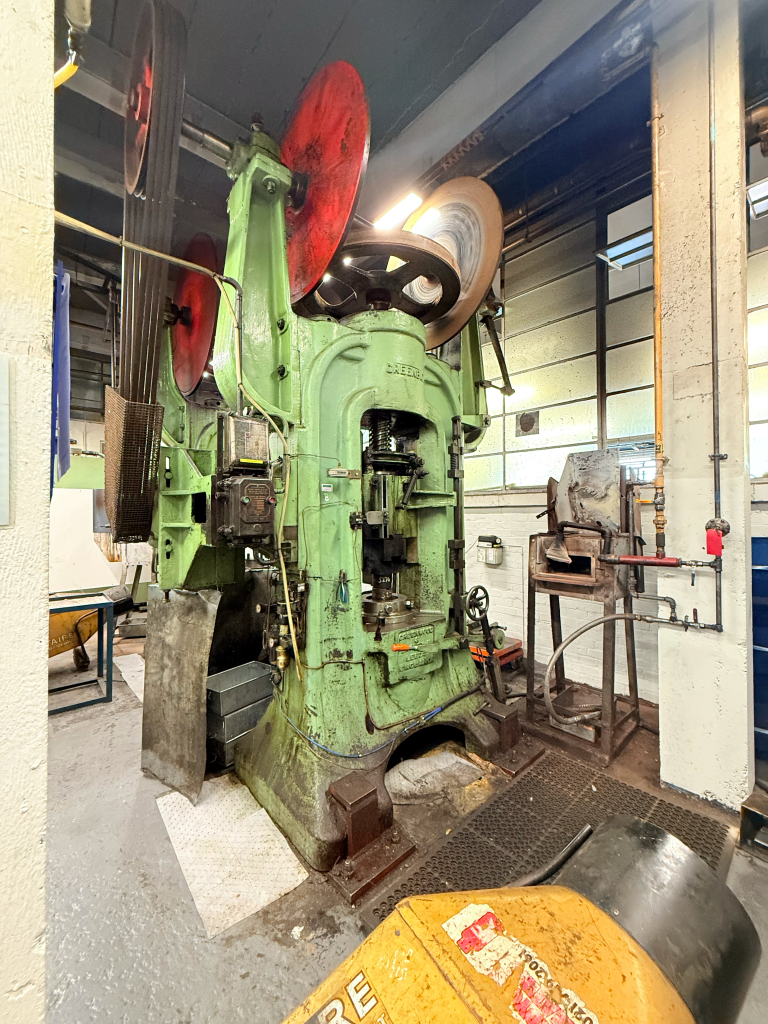
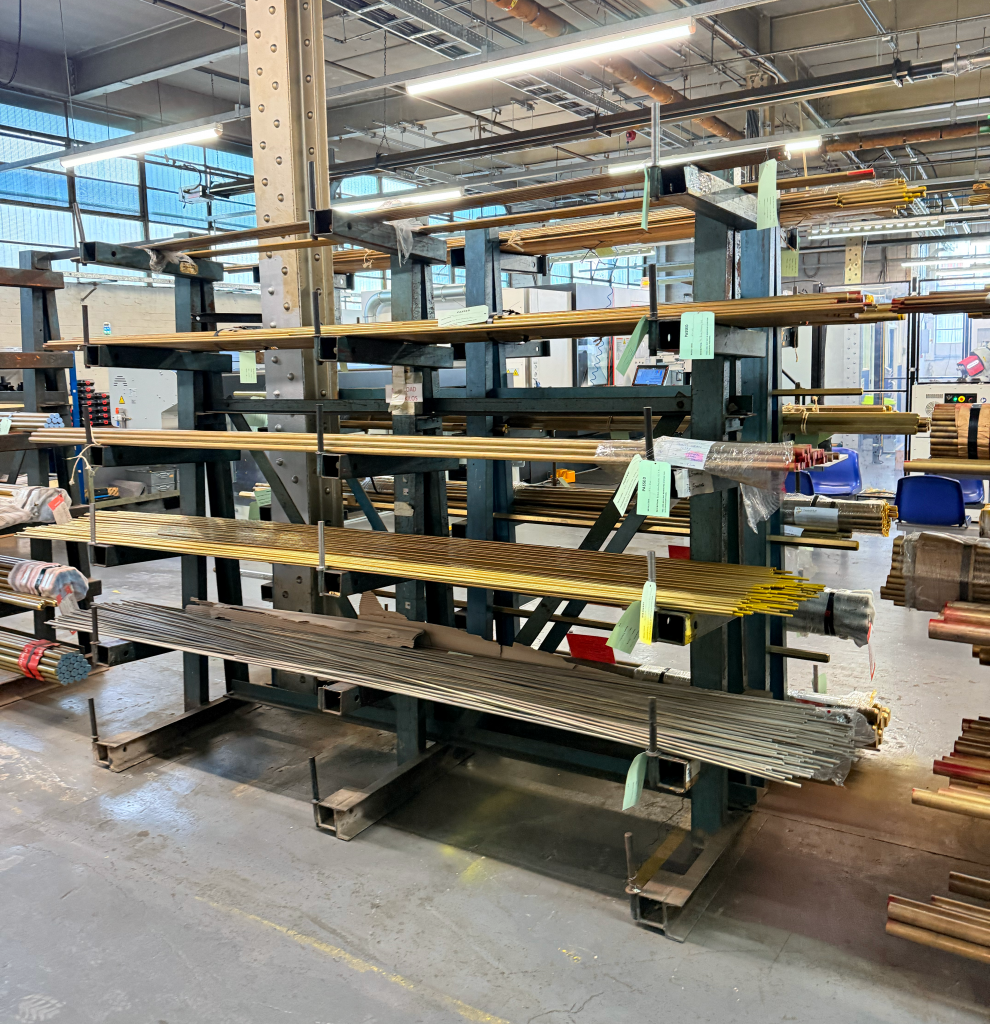
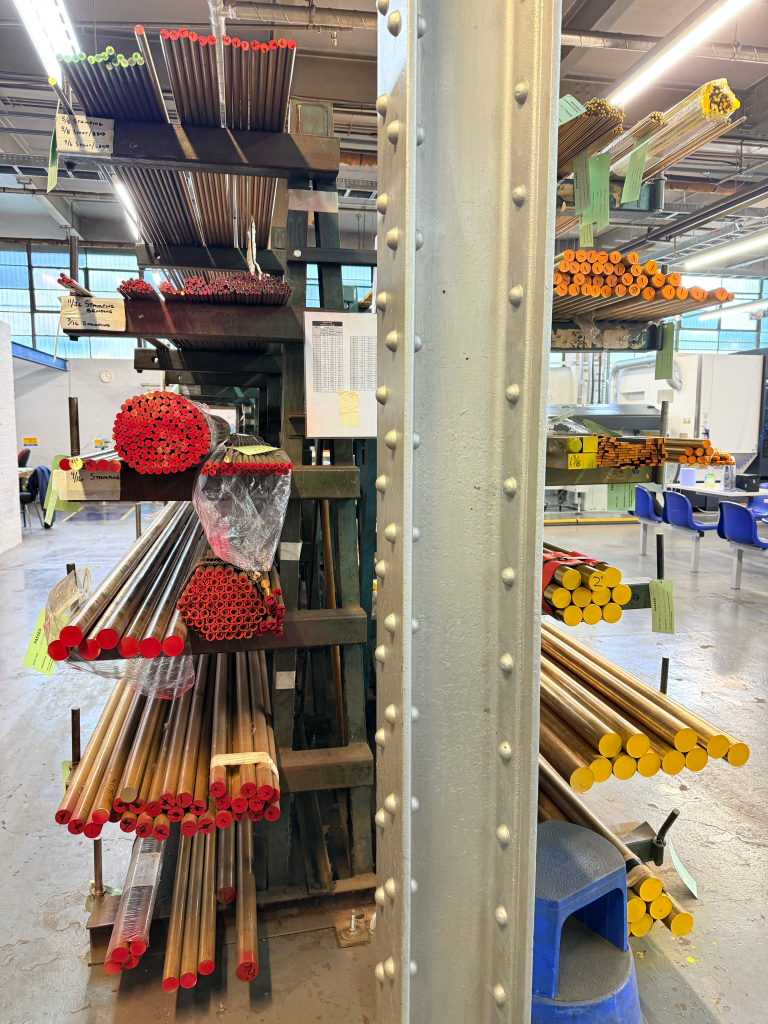
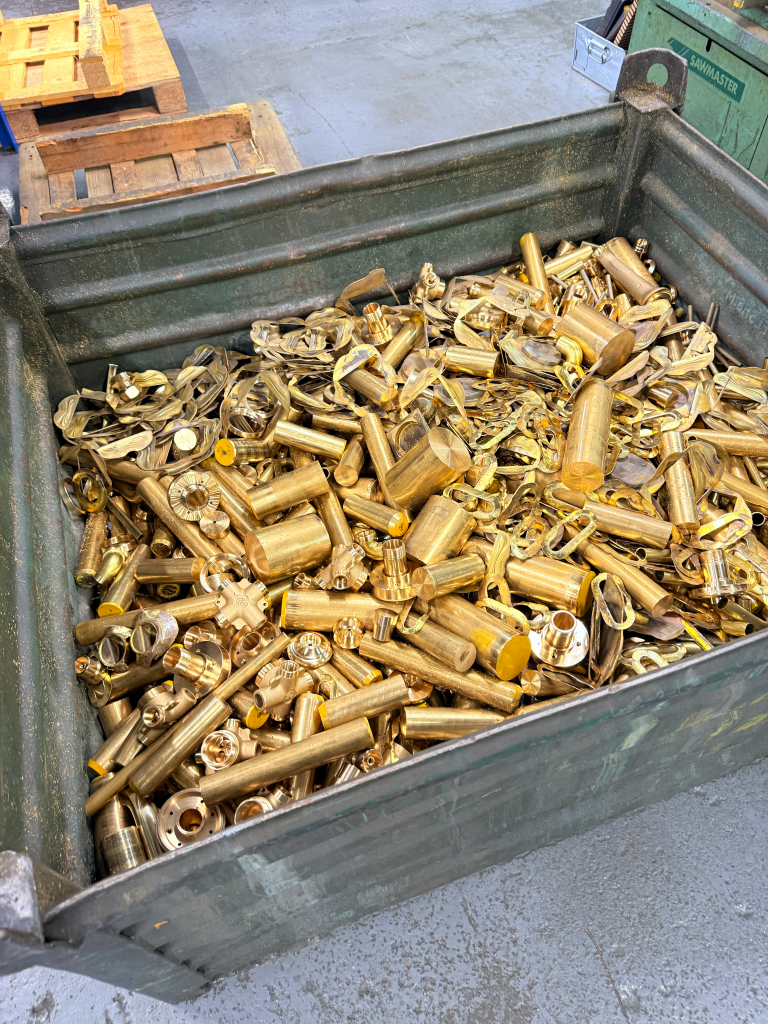
Samuel Heath describes a production process that brings brass forming and machining together with hand polishing, electroplating, assembly and inspection.
Looking at the making encourages attention to more than the final silhouette. A product depends on its component parts and the care with which they are brought together.
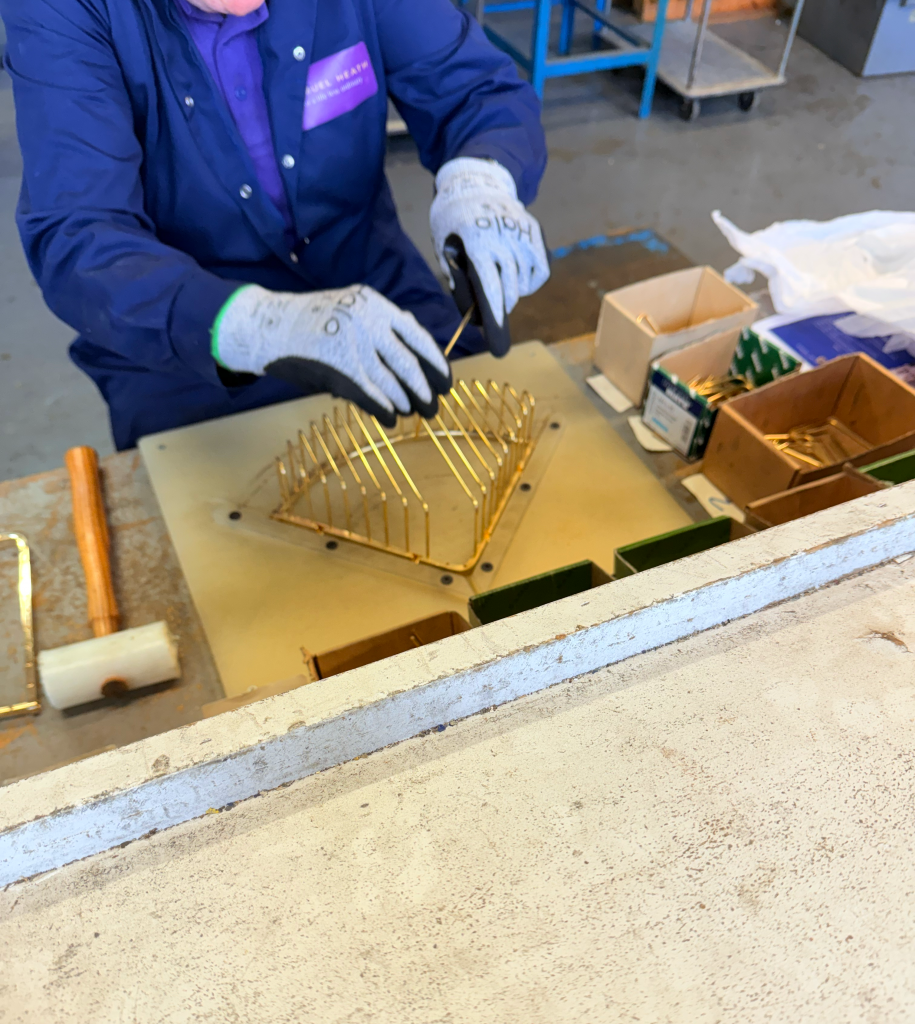
The relationship between machinery and hand work is particularly interesting. Precision and judgement contribute in different ways, with the finished object emerging from a sequence of processes rather than a single moment.
Samuel Heath explains these methods in its own account of its craftsmanship . Seeing the factory provides another way to understand that work.
Surface / Colour / Character
Why the Finish Deserves a Closer Look
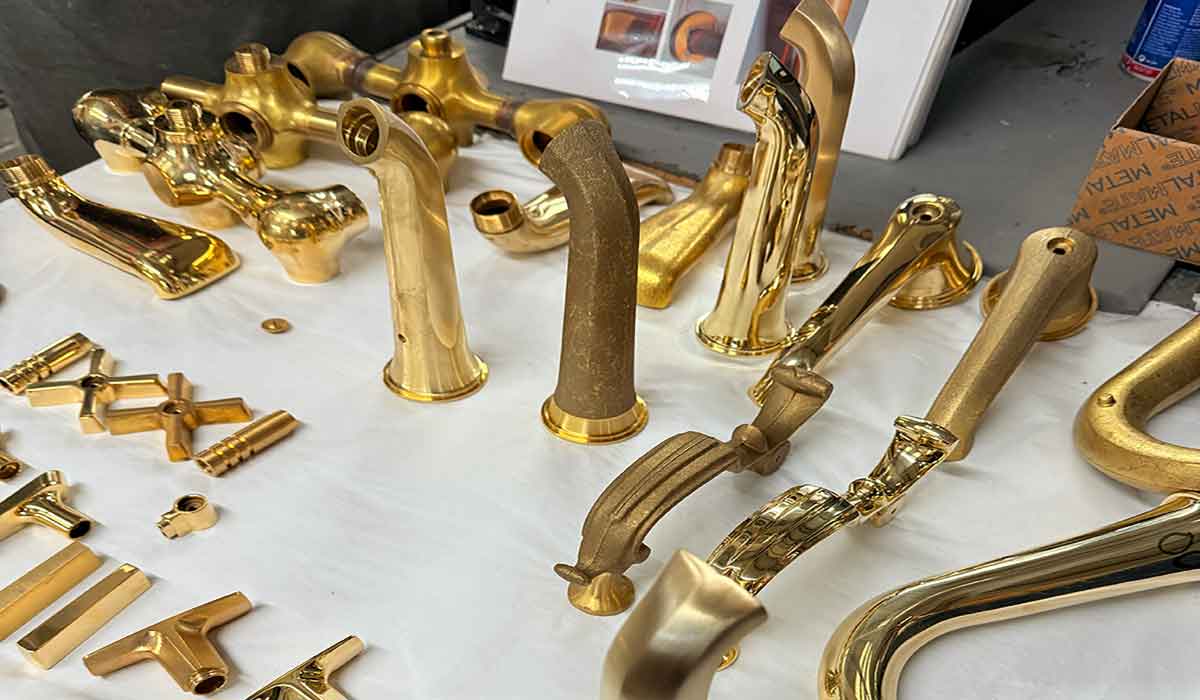
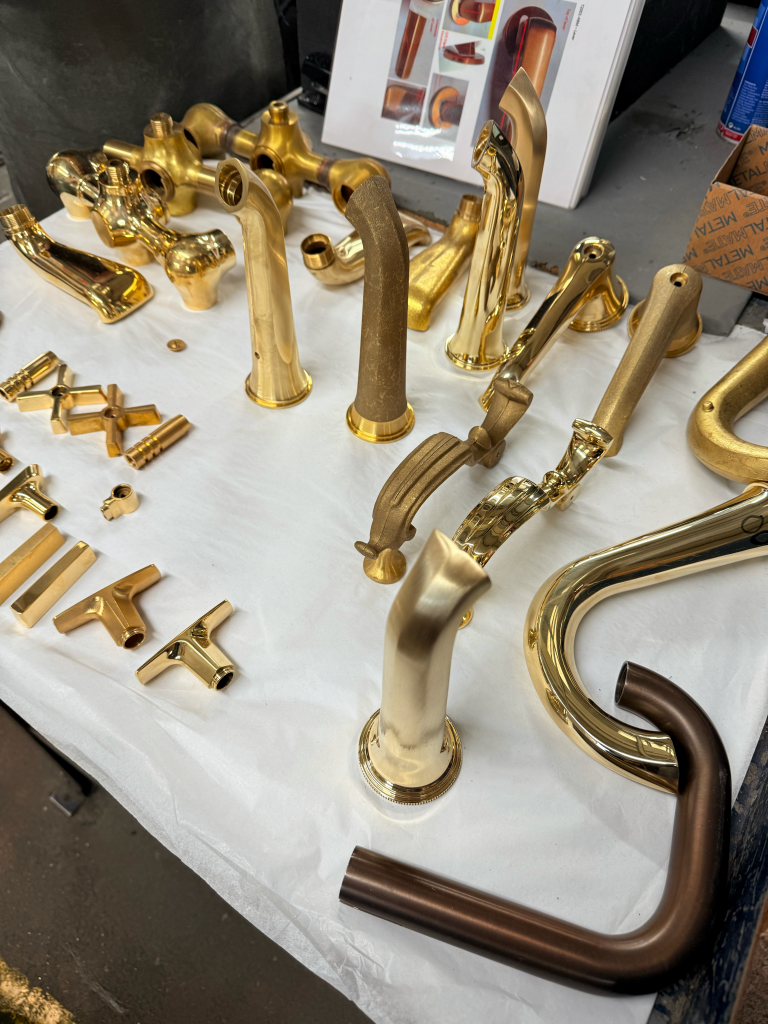
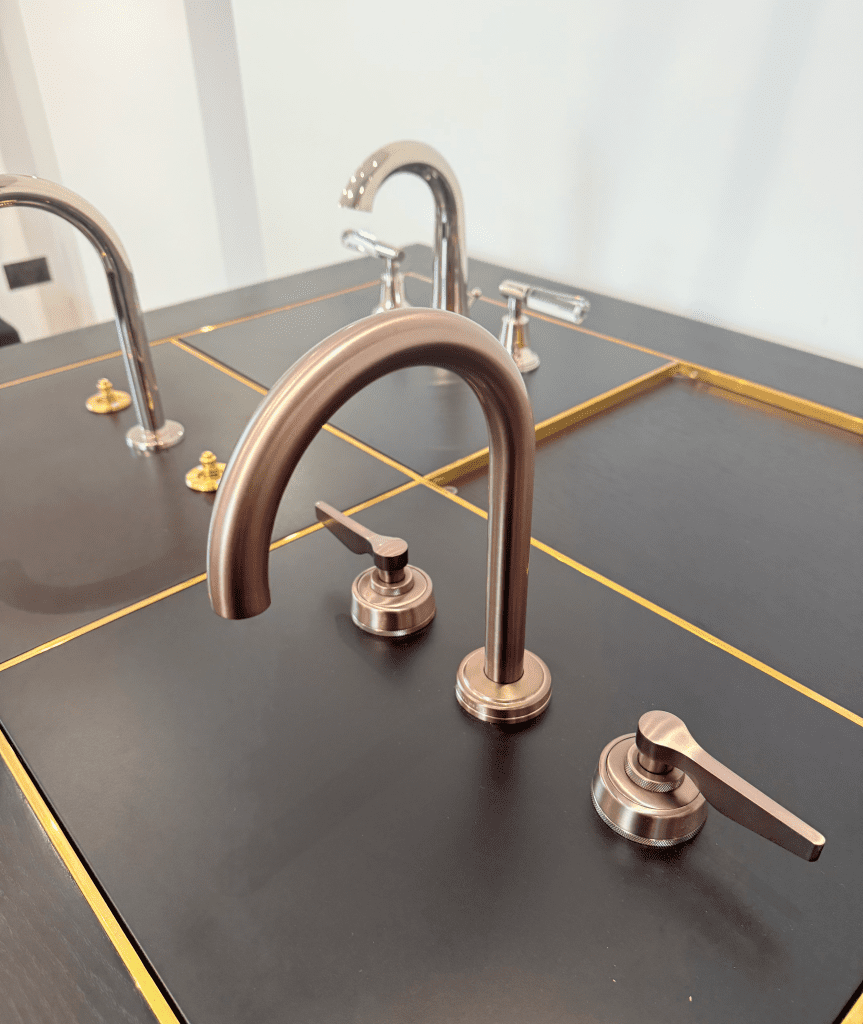
A metal finish is part of the wider material palette. It needs to be considered alongside stone, timber, painted surfaces, mirrors and lighting.
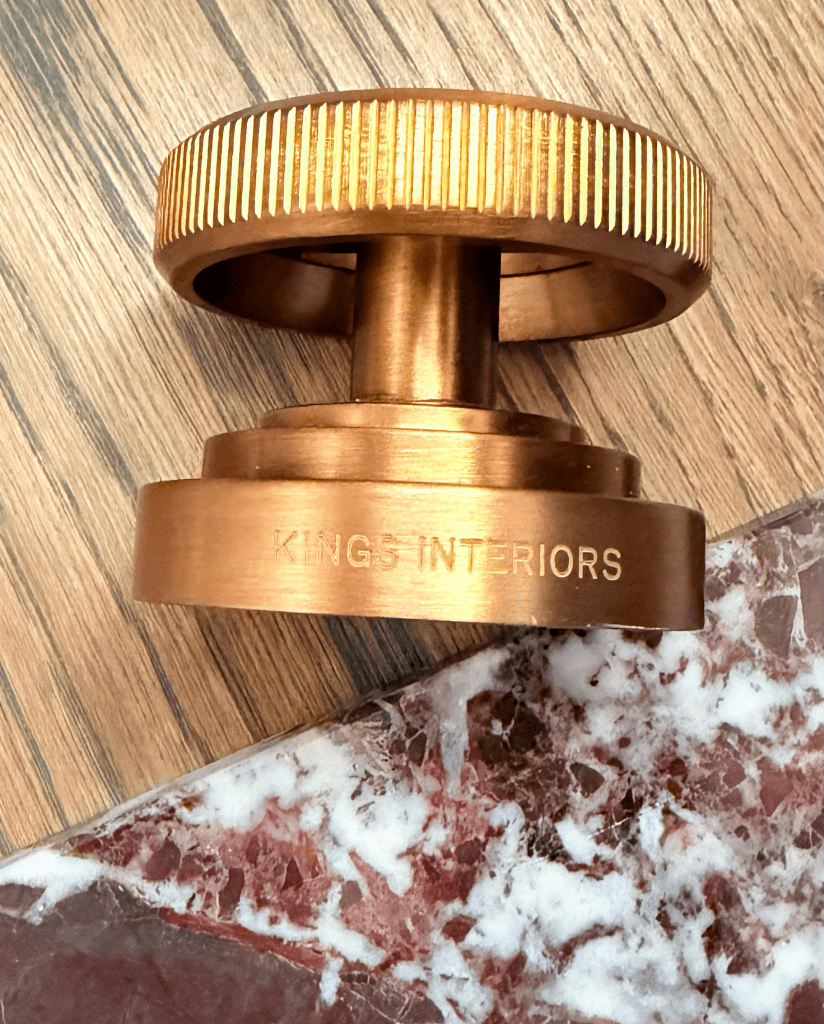
The factory visit offered time to focus on the work behind the surface, including the hand-finishing processes described during the tour.
In a bathroom scheme, I would review brassware samples with the surrounding materials rather than choosing a finish from its name alone. The particular tone and surface quality matter within that composition.
The same approach applies when coordinating different fittings. A shared colour description does not establish that products from different collections will look identical together. Physical samples and manufacturer information provide a more useful basis for selection.
Bringing the knowledge into a project
Beautiful Fittings Need a Considered Setting
Selecting bathroom brassware involves more than choosing an attractive collection. Its scale and position need to work with the basin, bath or shower arrangement being developed.
The interior design process considers those relationships alongside cabinetry, surfaces and the room as a whole. The relevant manufacturer details then need to be coordinated with the appointed technical professionals and installers.
For architectural hardware, the surrounding door, cabinet or fitted element provides the setting. Proportion and finish contribute to the design, while practical and technical suitability require the appropriate checks.
Understanding more about the manufacturer helps inform the questions asked during specification. Each selection still needs to be assessed against the requirements of its particular project.
Beyond the installation
Consider How a Finish Will Be Lived With
The conversation about a finish should include its care and the client’s expectations of its appearance over time.
Samuel Heath distinguishes between living and protected finishes in its care guidance, explaining that finishes can change through use. The appropriate instructions should accompany the final selection.
This is useful information to discuss before ordering. A client who enjoys a developing surface may have different preferences from someone seeking a more consistent appearance.
Making that distinction early helps the specification reflect the household as well as the visual scheme. Confirm current care requirements directly with Samuel Heath for the chosen product and finish.
Returning to the studio
A More Informed Way of Selecting
A factory visit provides context that remains useful after the day itself. The photographs become reminders of the processes and the questions behind the finished products.
For me, the value lies in looking more closely. An interior is experienced at many scales, from the first view of a room to the handle used each morning.
Those smaller details deserve to be selected with the same thought as the larger elements. Their design, making and suitability all contribute to the experience of the home.
My visit to Samuel Heath offered a closer understanding of one manufacturer’s work, and a useful perspective to bring into future design conversations.
Kings Interiors / Studio journal
Thoughtful Interiors, Considered Down to the Detail.
Materials, fittings and finishes are most meaningful when considered within a complete interior. The aim is a home whose choices relate naturally to one another and to the people using them.
At Kings Interiors, we develop those relationships through room planning, material selection, fitted detailing and furnishing, within an agreed scope for each commission.
Explore our residential portfolio or learn about our full-service interior design approach .
If you are considering a project, tell us about your home and what you would like to achieve.