
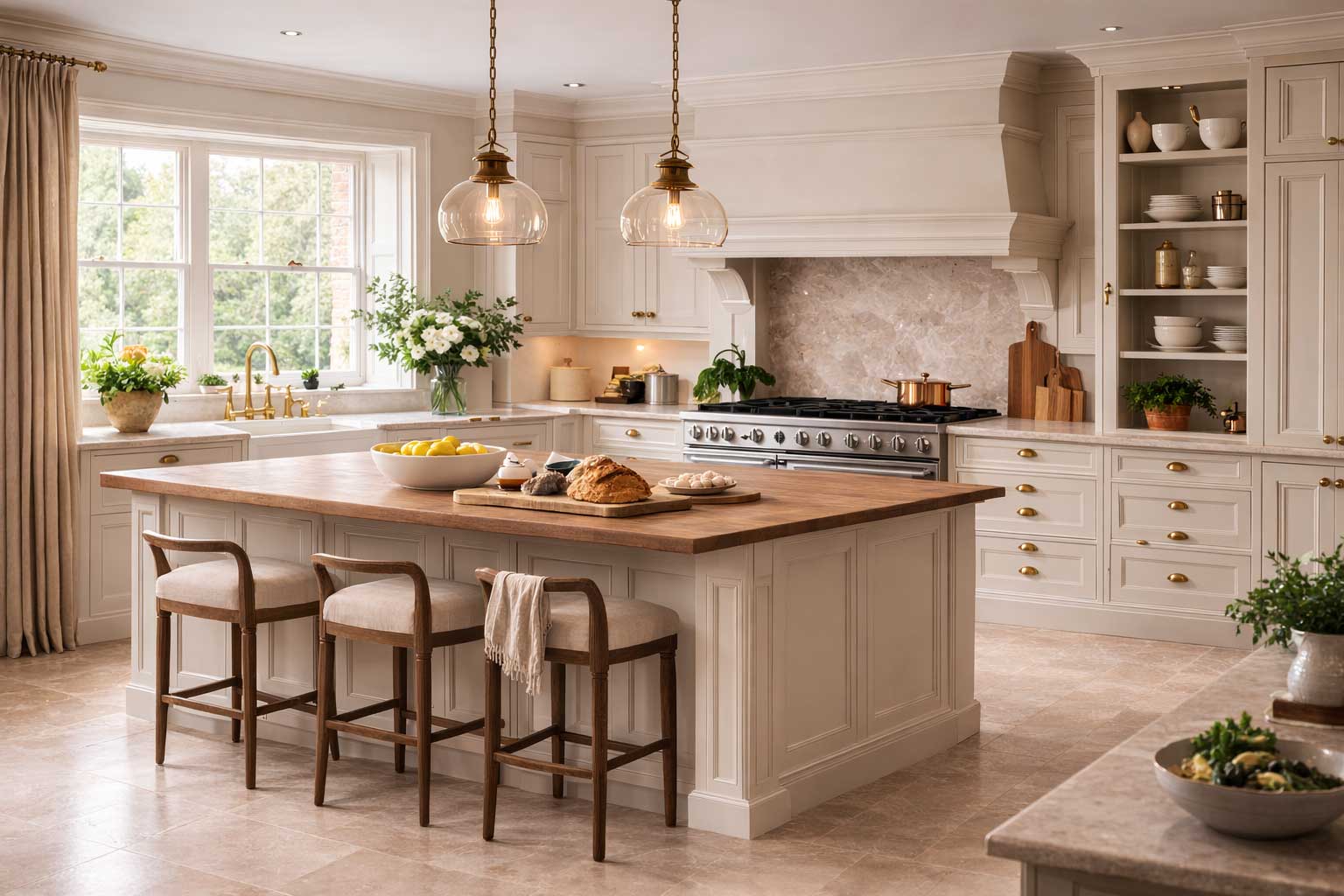
Period homes are admired for their architectural character, elegant proportions and historic craftsmanship. However, many traditional properties were designed with smaller kitchens that were intended primarily for cooking rather than entertaining or family living.
Today, homeowners often choose to extend their kitchens to create larger, more sociable spaces that better suit modern lifestyles. A well-designed extension can transform the heart of the home while preserving the architectural character that makes period properties so desirable.
Kitchen extensions are often part of wider renovation projects. Understanding how much luxury interior design costs in the UK can help homeowners establish realistic budgets and understand the level of design involvement required for a high-end renovation.
Why Kitchen Extensions Are Popular in Period Homes
Victorian and Edwardian houses often feature compartmentalised layouts, with kitchens positioned at the rear of the property. While charming, these spaces can feel restrictive by modern standards.
Kitchen extensions allow homeowners to:
- Create open-plan kitchen and dining areas
- Introduce large kitchen islands
- Improve natural light
- Connect the kitchen to the garden
- Increase storage and functionality
Many renovation projects also involve reconsidering the layout of the home. Our guide to structural changes that transform older homes explores how architectural alterations can improve spatial flow and functionality in historic properties.
For homeowners planning larger projects, it can also be helpful to understand how interior designers add value to full home renovation projects, particularly when extensions form part of a broader redesign of the home.
Designing a Kitchen Extension for a Period Property
Designing an extension for a historic home requires a careful balance between contemporary design and traditional architecture.
Key design considerations include:
- Respecting the original proportions of the property
- Using complementary exterior materials such as brick or stone
- Creating a clear transition between the original building and the extension
- Introducing modern glazing thoughtfully
Successful extensions feel like a natural continuation of the existing architecture rather than an unrelated addition.
Homeowners renovating historic properties may also benefit from reading our guide on renovating a period property: what to consider before you begin, which outlines the key architectural and planning considerations involved in restoring traditional homes.
Bringing Natural Light into the Kitchen
One of the biggest advantages of extending a kitchen is the opportunity to dramatically increase natural light.
Popular design solutions include:
- Roof lanterns
- Skylights or roof lights
- Large sliding or bifold doors
- Floor-to-ceiling glazing
These elements brighten the space while strengthening the connection between the interior and the garden.
Open-Plan Living and Kitchen Extensions
Modern homeowners increasingly prefer open-plan layouts where cooking, dining and relaxing can happen within one cohesive space.
Kitchen extensions often incorporate:
- Kitchen islands with seating
- Integrated dining spaces
- Informal living areas
- Direct access to terraces or gardens
These layouts transform kitchens into multifunctional spaces that support everyday living as well as entertaining.
This type of spatial transformation is frequently part of a larger renovation strategy. Our article on country house interior design in Berkshire explores how thoughtful interior planning can create cohesive, elegant homes that respect architectural heritage.
Planning Permission and Period Homes
Depending on the size and design of the extension, planning permission may be required.
This is particularly relevant if the property is:
- Located within a conservation area
- Listed or historically protected
- Subject to local planning restrictions
Working with architects and interior designers early in the process ensures that the extension enhances the property while remaining compliant with planning regulations.
For homeowners renovating historic houses locally, our article on period home renovation in Windsor explores how design and planning considerations apply to heritage properties in the region.
Creating a Timeless Kitchen for a Period Property
The most successful kitchen extensions balance contemporary design with timeless materials and craftsmanship.
This often includes:
- Bespoke cabinetry
- Natural stone worktops
- Solid timber detailing
- Architectural lighting
- Neutral colour palettes
When carefully designed, kitchen extensions can dramatically improve the functionality, atmosphere and value of a period property while preserving its historic character.
At Kings Interiors Ltd we specialise in luxury residential interior design for period homes, country houses and large renovation projects across Berkshire and the Home Counties.
If you are planning a kitchen extension or renovation project, you may wish to explore our luxury renovation interior design services or contact our studio to discuss your project.