
Period homes possess an architectural character that is rarely replicated in contemporary construction. From ornate cornicing and original fireplaces to carefully proportioned rooms and handcrafted detailing, these properties carry a sense of history and craftsmanship that forms the foundation of their appeal.
Designing interiors for period homes therefore requires a thoughtful balance. The goal is not simply to modernise the space, but to respect the architectural integrity of the building while introducing contemporary comfort and functionality. A carefully considered interior design strategy allows historic properties to evolve without losing the elements that make them unique.
For homeowners undertaking renovation projects, understanding how interior designers add value to full home renovation projects can provide valuable insight into how professional design expertise helps maintain this balance between heritage and modern living.
Understanding the Architectural Character of Period Homes
Successful interior design begins with a deep understanding of the building itself. Period homes often contain distinctive architectural features that form the identity of the property.
These elements may include traditional fireplaces, decorative plasterwork, panelled doors, timber flooring and carefully proportioned windows. Rather than removing these features, a design-led renovation seeks to restore and highlight them.
In many projects, these architectural details become the framework around which the interior scheme is developed. Materials, colour palettes and furniture layouts are chosen to complement the structure of the building rather than compete with it.
For homeowners considering larger renovation projects, our guide to renovating a period property explores the early considerations involved in updating historic homes while preserving their architectural integrity.
Integrating Modern Living into Historic Spaces
While period homes offer remarkable character, their original layouts were designed for lifestyles very different from today. Kitchens were often separated from living areas, storage was limited and natural light distribution was not always optimised for contemporary living.
Interior design plays an important role in reinterpreting these spaces. Rather than imposing a completely modern layout, designers carefully adapt the structure of the home to introduce better flow and functionality.
This might involve reconfiguring certain rooms, improving connections between spaces or introducing architectural interventions that enhance natural light. Our article on structural changes that transform older homes explores how these carefully considered modifications can improve the way period properties function.
Kitchens and Social Living Spaces
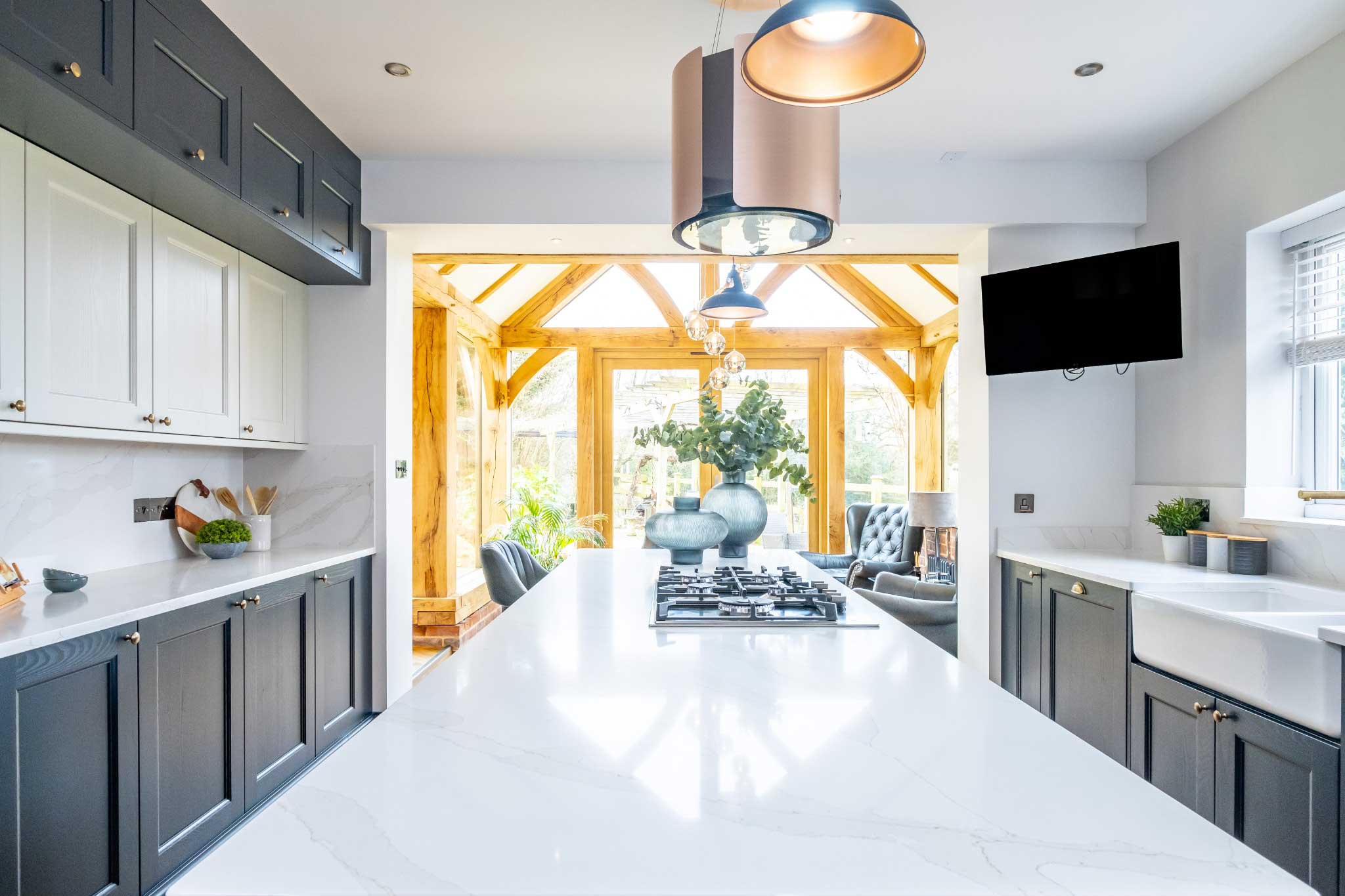
One of the most significant transformations in period homes often occurs in the kitchen. Traditionally designed as a service space, the kitchen has become the centre of modern family life.
Design-led renovations frequently involve extending or reconfiguring kitchens to create larger social environments that connect naturally with dining and living areas. These spaces often become the focal point of the home.
Our guide to kitchen extensions for period homes explores how carefully designed additions can introduce contemporary kitchen spaces while maintaining the architectural harmony of the property.
Bespoke Joinery and Architectural Detail
Bespoke joinery plays an essential role in period property interiors. Custom cabinetry, wall panelling and fitted shelving allow designers to introduce modern storage solutions while reinforcing the architectural rhythm of the space.
Rather than appearing as separate furniture pieces, bespoke joinery becomes integrated into the structure of the room itself. This approach allows new interventions to feel sympathetic to the original architecture.
Our article on bespoke joinery in luxury interior design explores how crafted joinery elements contribute to cohesive, high-end interiors.
Lighting Design in Period Interiors
Lighting design is another important element in period homes. Historic properties were not designed with modern lighting layers in mind, which means careful planning is required to create balanced illumination.
Architectural lighting can highlight decorative mouldings, artwork and structural features while introducing warmth and atmosphere throughout the home. When integrated discreetly, lighting becomes an invisible architectural tool that enhances the character of the space.
A Design-Led Approach to Period Homes
Interior design for period properties is ultimately about refinement rather than reinvention. Successful projects respect the architectural language of the home while introducing the comfort and functionality expected in contemporary living.
By combining careful spatial planning, considered materials and bespoke craftsmanship, period homes can evolve into spaces that feel both timeless and modern.
At Kings Interiors Ltd, our approach to renovation focuses on preserving architectural heritage while creating refined interiors tailored to the way homeowners live today. Homeowners planning a renovation project may wish to explore our luxury renovation interior design services or contact our team to discuss your project.