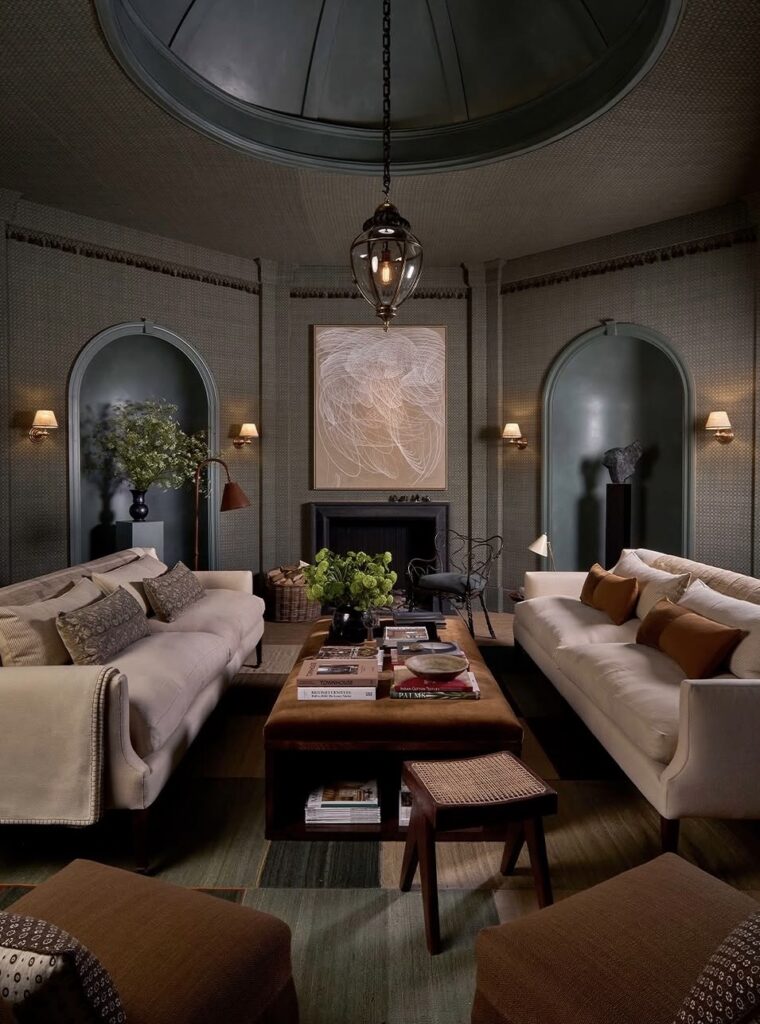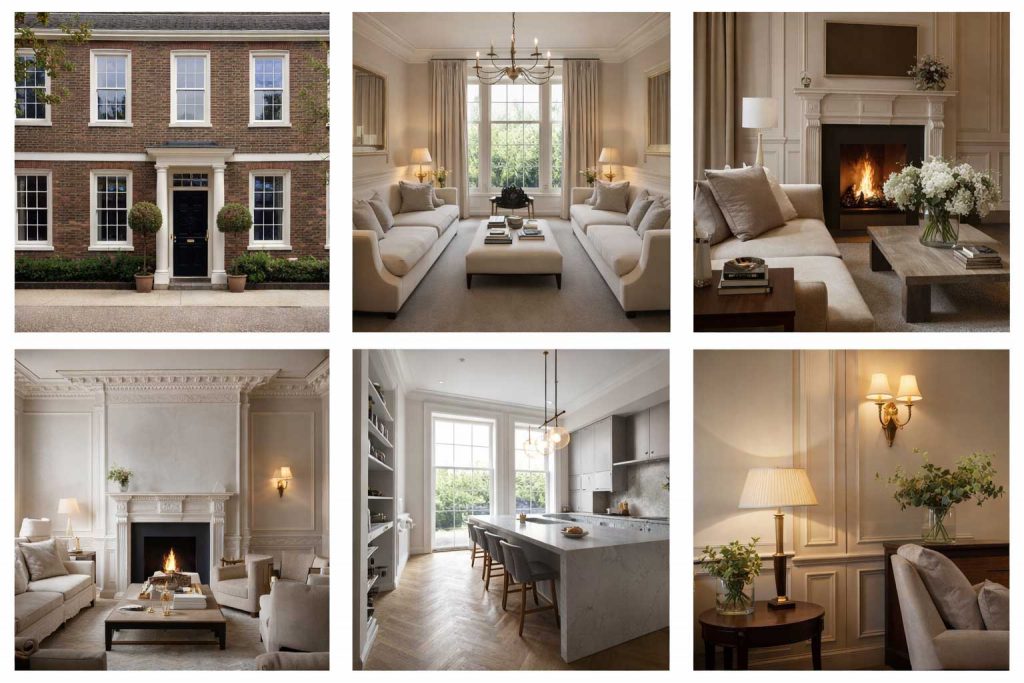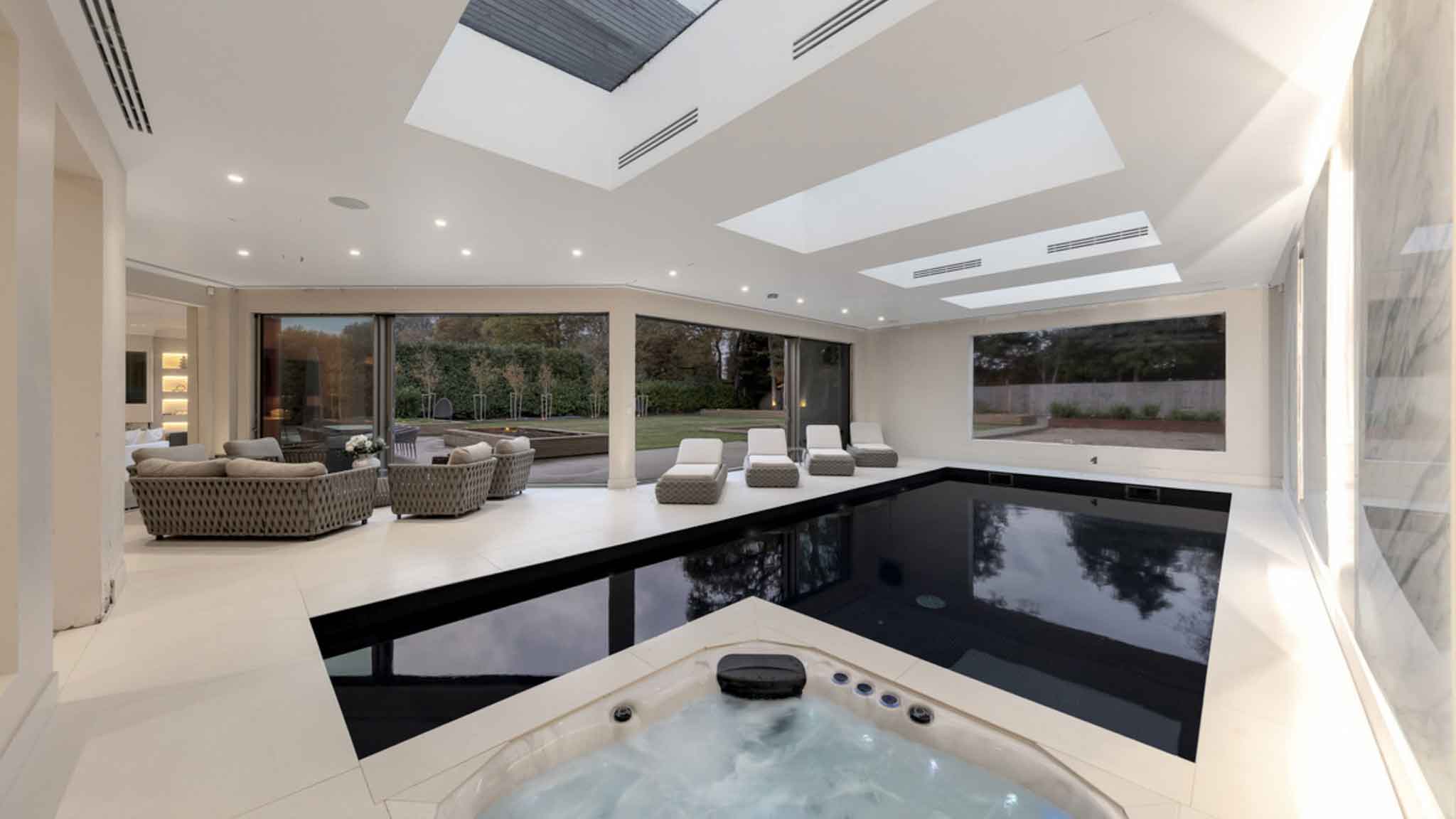
Bespoke new homes / Understanding the budget
Plan for the Home You Will Live In.
What should you allow for the interiors of a new home? The useful starting point is to establish what your construction budget includes, what remains to be specified and which professional services you need.
A quotation for building the property and a budget for completing its interiors are not necessarily the same thing. Some fitted elements may already sit within the works; furnishings and other purchases may require entirely separate allowances.
This guide explains how to bring those parts into view, so that your new-build budget reflects the intended home rather than a collection of incomplete estimates.
01 / Establishing the scope
Start With What Is Already Included
Review the current drawings, specification and cost information with your appointed team. Identify which interior items have been defined, which carry provisional allowances and which have not yet been included.
A kitchen, bathroom or fitted wardrobe may appear on a plan without its final specification being agreed. The allowance behind it needs to be understood before it can support a reliable budget.
Record who supplies and fits each element. Lighting, flooring and cabinetry are particular areas where purchasing schedules and contractor quotations need to be reconciled.
This exercise gives the interior brief a practical starting point and helps reveal omissions or duplicated allowances.
02 / Professional services
What Determines the Interior Design Fee?
The fee relates to the work the studio is appointed to undertake. It should be considered against a defined scope, rather than inferred from the construction value alone.
A commission developing layouts, interior details and specifications alongside the architectural proposals involves different responsibilities from furnishing rooms whose fitted elements are already complete.
The proposal should identify the rooms, design stages, drawings and specifications, together with the extent of meetings and coordination. It should explain how additional work is agreed if the brief changes.
At Kings Interiors, furniture and furnishings are always separate from the professional design fee. Their purchase requires an identified allowance.
03 / Specifying the permanent elements
Give Fitted Interiors Their Own Defined Allowances
Kitchens, dressing rooms, bathrooms and other fitted elements need budgets that reflect the intended specification. Their presence in the brief does not establish their eventual cost.
Cabinet dimensions, internal arrangements, surfaces, fittings and finishes can all affect supplier quotations. Drawings and specifications help make those requirements understandable.
Designing an element and paying for its manufacture are different costs. Installation and related trade work should also be identified.
Ask the team to keep provisional allowances visible until the relevant specifications and quotations are available.
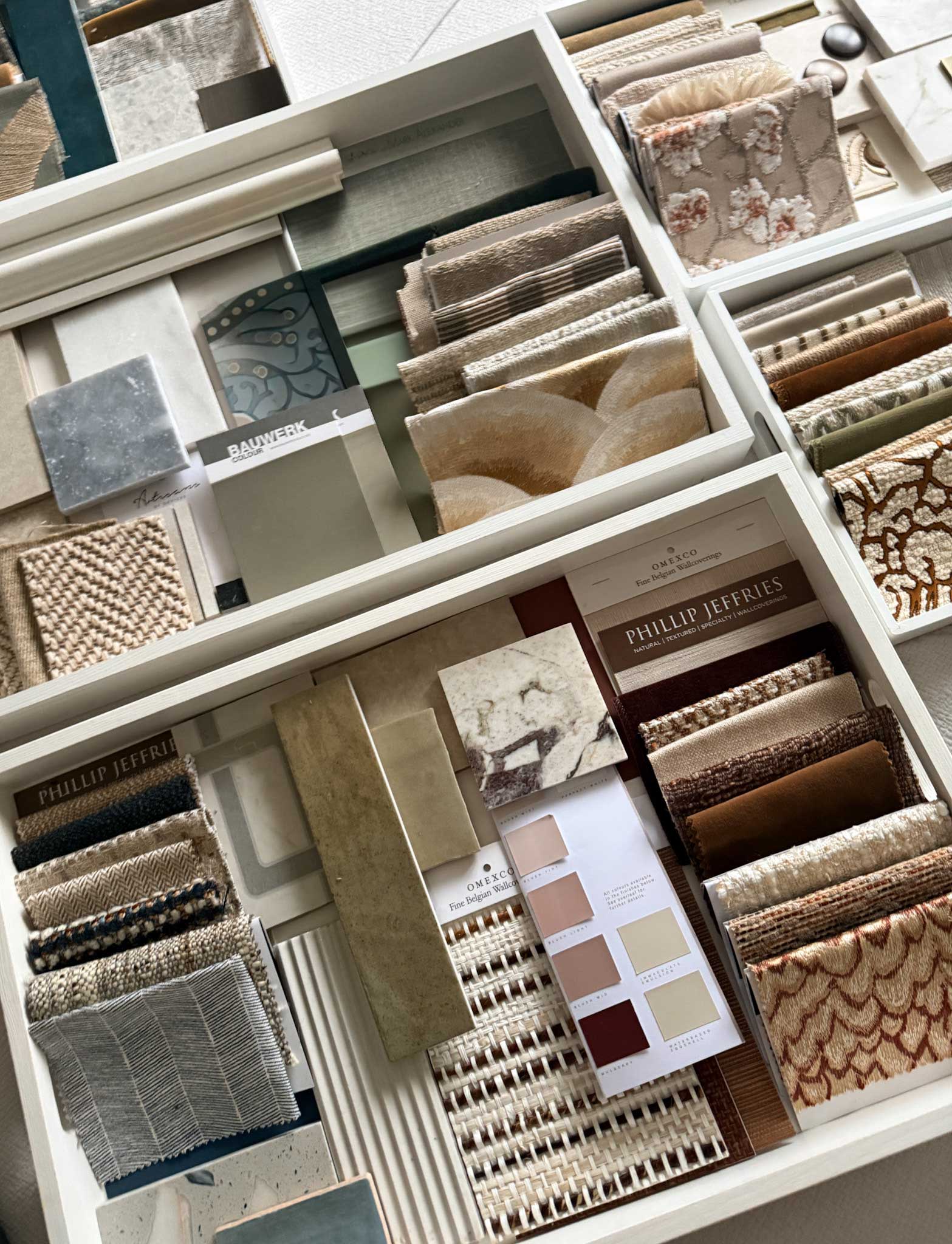
Specification / Making informed choices
The Specification Gives the Budget Meaning
Two allowances with the same description may cover very different products. A clearer specification makes the comparison more useful.
Review material choices alongside dimensions, quantities, fabrication and fitting requirements. The finished appearance depends on how these parts work together.
Agree priorities within the overall scheme. The objective is to choose an appropriate level of detail and craftsmanship for each part of the home.
04 / Completing the rooms
Build the Furnishing Budget Room by Room
Prepare an inventory of the pieces each room needs. Include existing furniture you intend to retain, together with any restoration or reupholstery requirements.
New purchases may include seating, tables, beds, rugs, curtains, lamps and accessories. Window dimensions and room proportions can materially change the quantities and sizes required.
Give supporting rooms the same practical attention as the principal spaces. Guest bedrooms, studies and circulation areas should not disappear from the schedule.
Distinguish essential purchases from items that can follow later. This creates a useful basis for discussing priorities without losing the overall design direction.
New-build interiors
From Construction to a Finished Home
A complete interior budget considers the rooms beyond the building work, including furniture, textiles, decorative lighting and installation.


05 / Purchasing and practical delivery
Separate the Goods From the Service of Ordering Them
Procurement concerns the administration of approved purchases. Its scope may include placing orders, communicating with suppliers, tracking lead times and coordinating delivery arrangements.
Your proposal should explain how this service is charged and whether it is included elsewhere. The price of furniture should not be confused with a charge for managing its purchase.
Delivery, storage, specialist handling and installation also need identifiable allowances. A service that organises an activity does not necessarily include the supplier’s charge for carrying it out.
For the wider explanation of design and purchasing arrangements, read our interior design cost guide .
06 / Keeping the picture clear
Review Commitments as the Design Develops
Keep a record of allowances, quotations, approvals and orders. A selected product is not necessarily a confirmed purchase.
Record VAT treatment consistently and request clear totals payable. Agree a payment forecast covering professional invoices, supplier deposits, balances and installation costs.
Discuss contingency with the appointed team in relation to unresolved requirements. Keep that reserve visible as the specification becomes firmer.
When a change is proposed, review its effect on related items and the programme before approving the expenditure.
Practical questions
Before You Agree Your Interior Budget
Can I calculate interior design costs as a percentage of my build budget?
A percentage can describe a particular fee arrangement, but it does not define what the finished interiors will cost. Establish the services, purchases and works included before relying on a headline figure.
Does the design fee include furniture and furnishings?
No. At Kings Interiors, furniture and furnishings are always separate from the professional design fee. Procurement arrangements and charges are explained in your proposal.
Are kitchens and bathrooms included in the construction budget?
Check the actual specification and quotation with your team. They should identify whether these elements are fully specified, provisionally allowed for or excluded, and who supplies and installs them.
Can you prepare a proposal before every finish has been selected?
The professional appointment can be defined around an agreed scope while purchasing allowances remain provisional. Those allowances should be reviewed as specifications and quotations become available.
Does appointing the designer early guarantee savings?
No savings should be guaranteed. Early involvement creates an opportunity to review interior requirements while related decisions are still open, making their implications easier to assess.
Can the furnishing work be phased?
Phasing can be discussed when developing the brief. An overall scheme can guide later purchases, while separate deliveries, storage and changes in supplier prices or availability are considered in the budget.
What information should I share with the studio?
Share the current plans, project stage, intended timing and the rooms involved. Include available specifications and an investment range, explaining what that range needs to cover.
Kings Interiors / Bespoke residences
A Clearer Budget for Your New Home.
Understanding the investment begins with knowing what is included, what remains undecided and which services will bring the interior together.
Kings Interiors develops residential interiors through a project-specific appointment. Our proposal sets out the services, fees and responsibilities for your commission.
Explore our full-service interior design approach to learn about planning, detailing and furnishing a bespoke residence.
To discuss your new home, tell us about your plans and the stage you have reached.